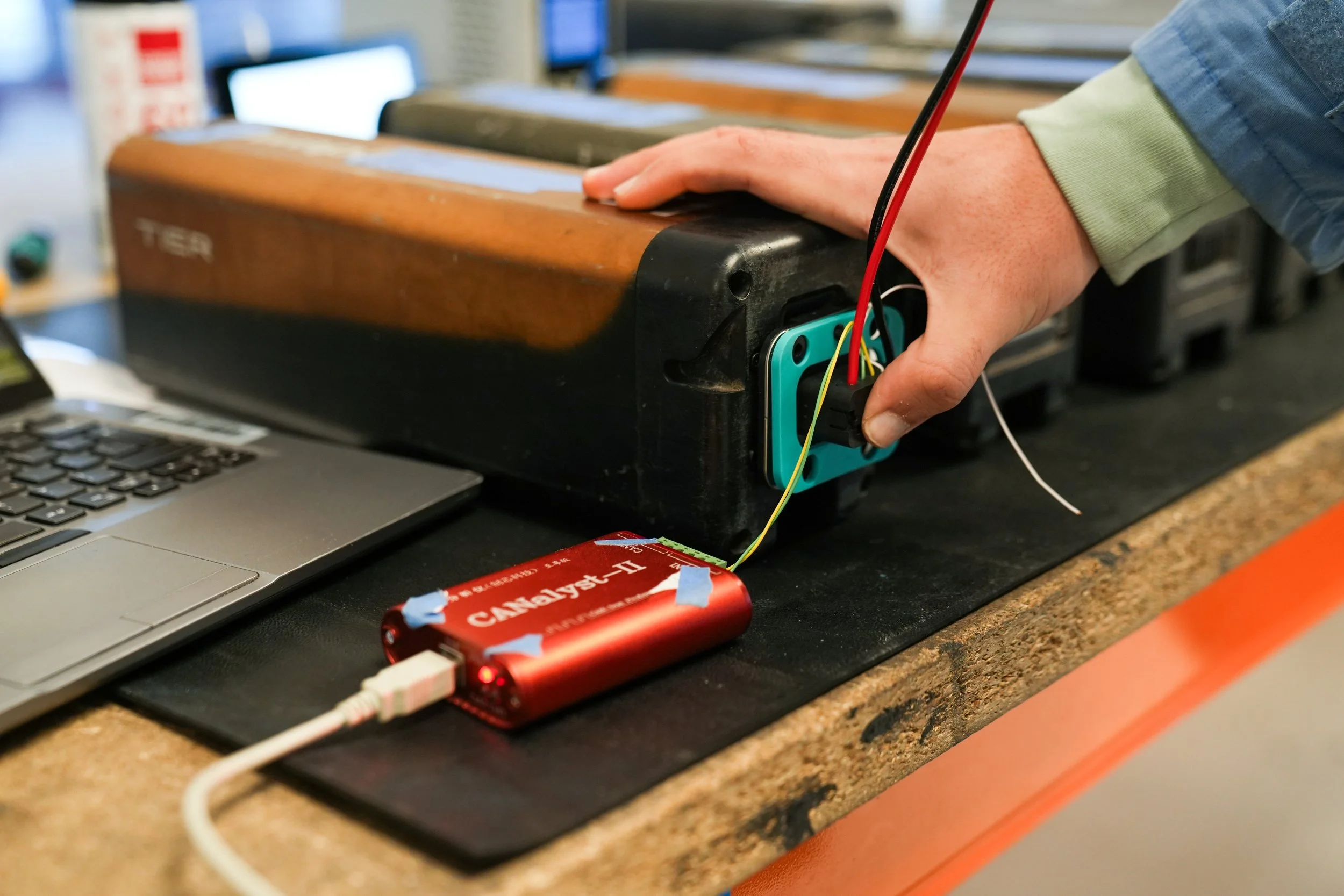
Dott x NOWOS x EIT Urban Mobility: Project MOBIRE accelerates repair innovation, a Battery Passport pilot, and new repair hubs
Beyond Repair: How NOWOS is Engineering the Blueprint of Battery Circularity
Currently, 90% of lithium-ion batteries are decommissioned prematurely, despite most retaining over 80% capacity. At NOWOS, we view this as a massive financial and material inefficiency. Since 2020, our mission has been to replace the "disposable" battery misconception with a profitable, industrial-scale circular economy.
We are proud to highlight our mission MOBIRE, a strategic collaboration with Dott and EIT Urban Mobility. While EIT Urban Mobility financed this project and supported with structure, Dott provides their fleet hardware with real-time operational needs for this project, NOWOS provides the technical blueprint and infrastructure to ensure those assets stay on the road longer.
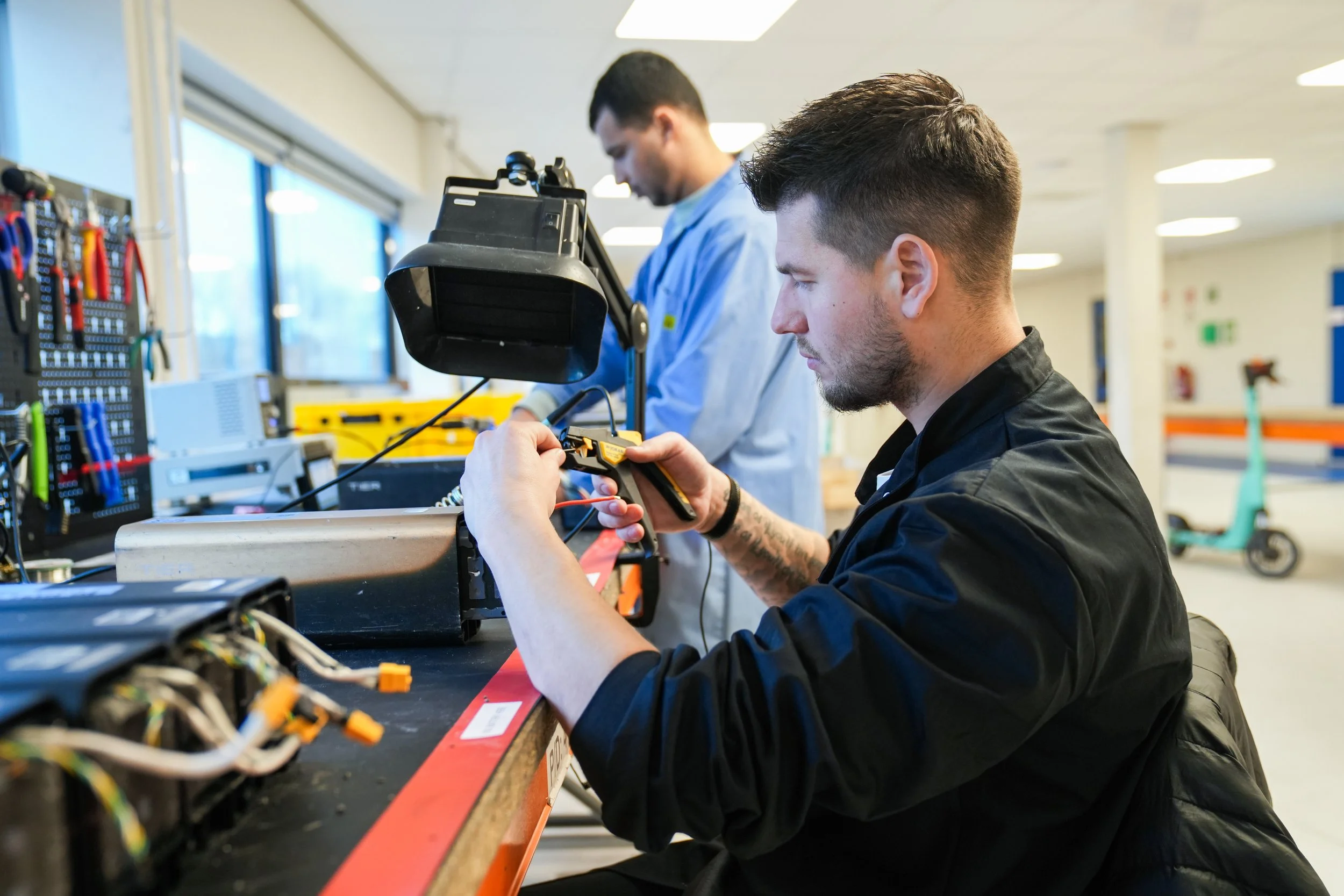
Scaling Industrial Excellence
The project focused on two critical aspects, digital tracking and physical life-extension by restoring modular battery components. The aim was to prove that a scalable, economically viable repair process can align the interests of Original Equipment Manufacturers (OEMs), fleet operators and repair partners, preventing premature recycling and extending battery lifespans at scale.
NOWOS implemented a digital Battery Passport into their industrial repair workflow using a 3rd-party platform. This system creates a digital twin for each battery, tracking its technical history, state of health (SOH) and service logs as required per upcoming Battery Regulations. Dott supported this by providing the fleet hardware and real-world usage data to validate the passport’s accuracy and lifecycle tracking capabilities.
The consortium also worked on improving battery repair processes at NOWOS’s industrial hubs, processing a total of more than 2000 batteries from Dott’s urban fleet. The scope covered thousands of batteries from Dott’s fleet, specifically targeting the Ninebot C1/A200 batteries but also OKAI E400A models.
RESULTS & IMPACT
The pilot demonstrated a high-throughput repair line where units are triaged, repaired and safety-certified at scale, moving modular battery maintenance from an individualised 100% manual process to a scalable process with semi-automated diagnosis, sensitive repair steps and quality/functional control steps.
The results showed measurable benefits across the value chain. Certified repair delivered a 30% cost reduction compared to purchasing new OEM batteries, creating a strong economic incentive for fleet operators and OEMs alike. The project diverted 500 batteries from premature disposal, significantly reducing material waste and associated emissions. Beyond environmental gains, the initiative supported regional economic development, with a new repair centre planned to open in 2026, 20 new local jobs will be created, demonstrating that circular battery repair can scale as a sustainable industrial activity.
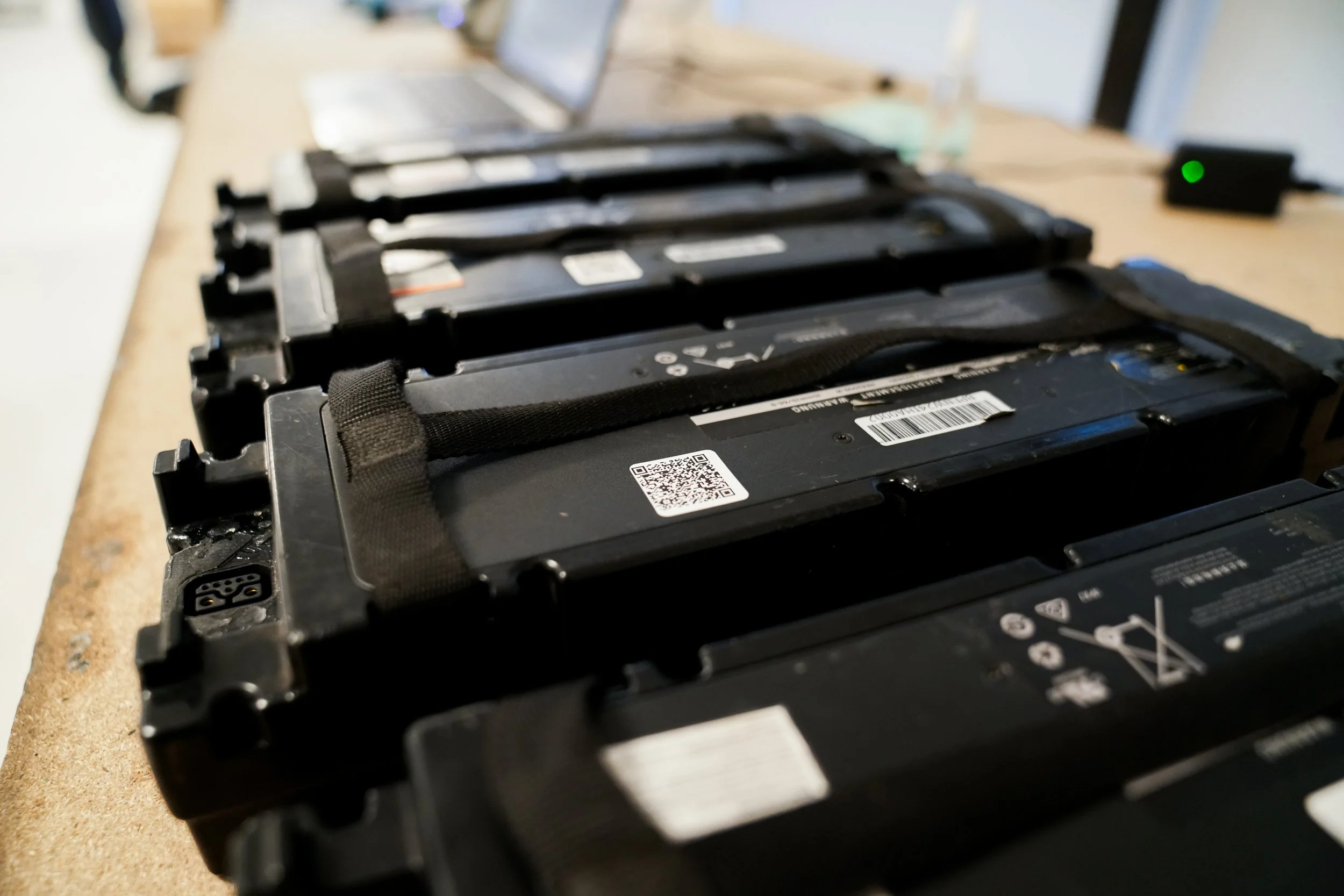
The Battery Passport
The new EU Battery Regulation mandates that all batteries in Europe must be repairable with a sustainable lifecycle. With the Battery Passport becoming mandatory for light transport batteries from February 2027, NOWOS is ensuring our partners stay ahead of the curve.
What We Delivered in 2025
Improved Repair Protocols
Commissioning of a new Repair Hub in Poland, optimized for fleets and part of the expansion of NOWOS ecosystem.
A functional Battery Passport system integrating NOWOS diagnostic data to ensure total transparency.
A proven, scalable solution (TRL 9) ready for adoption across the micromobility industry